
How the John Deere 325G Handles Wet Spring Soil Without Damaging Property
3/19/2026
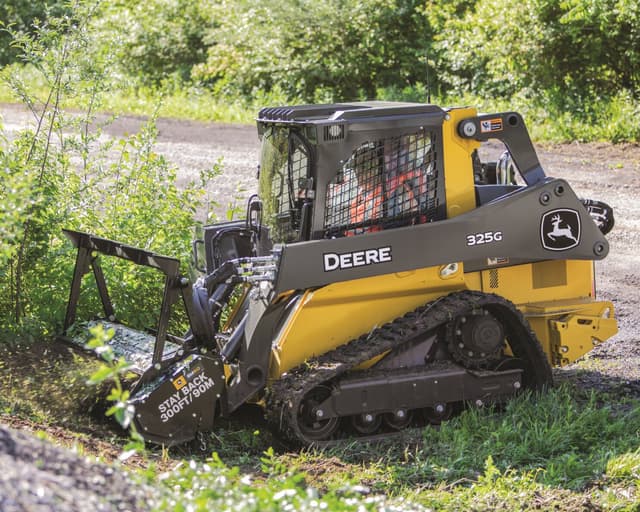
Spring in Mississippi is a wet season. Between February and May, the combination of heavy rainfall and poorly draining clay soils turns job sites and rural properties into unpredictable working environments. Equipment that handles dry summer conditions well can quickly become a liability when the ground softens—tearing up yards, sinking into low spots, and causing compaction damage that takes seasons to repair.
The John Deere 325G Compact Track Loader was built for exactly these conditions. Here's how it handles Mississippi's wet spring soil, and why that matters for your property and your work.
Wheeled machines—skid steers, wheel loaders, compact tractors without tracks—concentrate their weight on four contact points. On dry ground, that's no problem. On wet Mississippi clay, it creates deep ruts, pulls up surface material, and compacts the subsoil. That compaction isn’t just a cosmetic problem; it damages pasture roots, halts drainage, and can often take years to reverse.
Track-based machines distribute their weight across a much larger surface area, dramatically reducing ground pressure. With a tracked machine, you can work safely in wet conditions that would leave a wheeled machine bogged down and your property torn up.
The 325G runs on rubber tracks with a wide footprint specifically designed to minimize ground pressure. On soft or wet Mississippi soil, this is the difference between getting the job done and calling it a day.
The undercarriage is built for durability in the kind of abrasive, muddy conditions that North and Central Mississippi properties see every spring. Rubber tracks protect lawns and finished surfaces far better than steel, making the 325G equally effective on a soft pasture and a newly seeded yard.
What it works for: wet site work, material hauling on soft ground, grading and cleanup, landscaping projects in heavy clay soils
What it doesn’t: long-distance transport between jobsite, road travel, tasks requiring PTO implements
The 325G puts out 74.3 horsepower and features a rated operating capacity of 2,590 pounds. That's more than enough for the material handling tasks that spring demands: moving mulch, gravel, topsoil, fill material, and brush piles without needing to make multiple trips.
The vertical lift path on the 325G means consistent reach at height. This is especially useful when loading material into trucks or placing it precisely without repositioning the machine over and over.
One of the 325G's strongest features is its attachment system. With a universal quick-attach and auxiliary hydraulics, switching from a bucket to a grapple, auger, or hydraulic thumb takes minutes. For spring property work, that versatility means one machine can handle brush removal, grading, and material hauling across the same workday.
Common spring attachments for the 325G include:
Spring property work isn't a one-hour job. The 325G's enclosed cab with optional heat and AC, low-effort joystick controls, and excellent visibility make long working days manageable. In Mississippi's unpredictable weather, climate control is worth having.
If you're managing a Mississippi property with spring workloads ranging from landscaping and site clearing to material hauling and other soft ground work, the 325G is a worthy machine. Stop into your local WADE, Inc. and we'll walk you through the specs, attachment options, and financing to see if it's the right fit for your operation.
Yes. The 325G's rubber track system distributes weight across a much larger surface area than wheeled machines, dramatically reducing ground pressure and allowing it to work safely in the wet, clay-heavy soil conditions that are common across Mississippi properties in spring.
The 325G handles a wide range of spring tasks including material hauling, grading, brush removal, and site cleanup. Its universal quick-attach system makes it easy to swap attachments like a root grapple, angle broom, hydraulic auger, or 4-in-1 bucket within the same workday.
The 325G is not designed for long-distance transport or road travel between job sites, and it does not support PTO-driven implements. For those tasks, a compact utility tractor is the better fit.