
The Best Attachments for Tackling Overgrown Pastures in the Mississippi Delta
2/11/2026
Delta pastures take a beating over winter. Between wet conditions, reduced grazing pressure, and weed growth, a neglected pasture can come out of the winter looking more like a brushy thicket than a managed field. Getting it back into shape before grazing season requires the right approach and the right attachments.
If you're managing Delta pastures with a John Deere compact or utility tractor, here are the attachments that make the biggest difference when spring cleanup gets serious.
Not all overgrowth is the same. A pasture that's been lightly neglected for one season needs a different approach than one that's been out of rotation for several years. Before you hitch up, walk the field and take stock of what you're dealing with. Look for:
In the Mississippi Delta, soil drainage is a major variable. Many Mississippi properties have poorly draining soils that stay wet well into spring. Working with heavy equipment in those conditions can cause compaction and surface damage that undermines your pasture recovery. Wait for adequate dry-out, or use a lighter touch in wet areas.
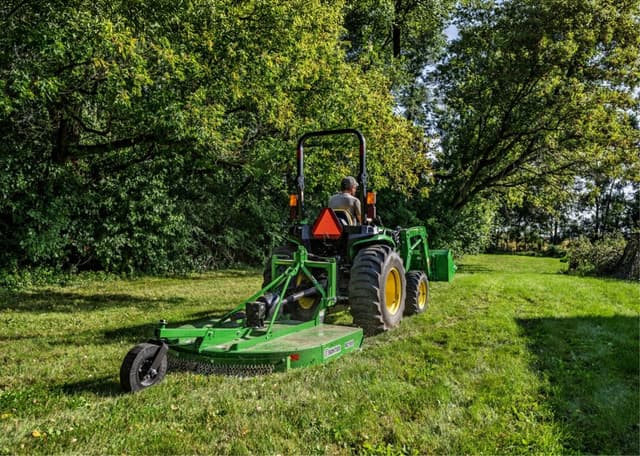
For most overgrown pasture situations, a heavy-duty rotary cutter is where you start. Nothing else covers ground as fast or handles mixed vegetation like grass, weeds, and light brush as effectively.
For properties with thick growth, look at a 5- or 6-foot cutter matched to your tractor's PTO horsepower rating. Undersizing your cutter is a common mistake. An underpowered cut leaves ragged material and requires multiple passes to clean up. Size up if your ground is consistently thick.
Pro Tip: On heavily overgrown pastures, set your cutting height higher than normal for the first pass. Cutting too low on thick, matted growth strains your equipment and risks scalping the soil surface. Come back lower on a second pass once the heavy material is cleared.
A brush hog (rotary cutter) and a finish mower are not interchangeable. A brush hog is built to handle tough, uneven material with thick blades and a heavy gearbox. A finish mower produces a clean, lawn-quality cut. A finish mower is not designed for the kind of material an overgrown Delta pasture throws at it.
For spring pasture rebuild, always start with a rotary cutter. Once your pasture is back to a manageable condition over several seasons, a finish mower may be appropriate for specific maintained areas.
If your pasture has heavy, stemmy material, a flail mower does a better job of mulching the residue than a rotary cutter. Flail mowers cut and re-cut material into small pieces, which break down faster and don't leave the heavy windrows that a rotary cutter can create.
The tradeoff is speed and cost. Flail mowers are slower than rotary cutters and more expensive. For a property owner dealing with seriously neglected pastures, the mulching benefit is worth it. For annual spring cleanup, a rotary cutter is sufficient.
Once you've knocked down the heavy growth, a disk harrow pass can help break up the mat of dead material and create better conditions for grass recovery. In Delta soils, this also helps break up surface compaction from winter.
This step isn't always necessary. A well-managed pasture with good existing grass coverage may recover fine with just a mow. But for a pasture that's been out of rotation, a single disk pass followed by overseeding can significantly improve recovery.
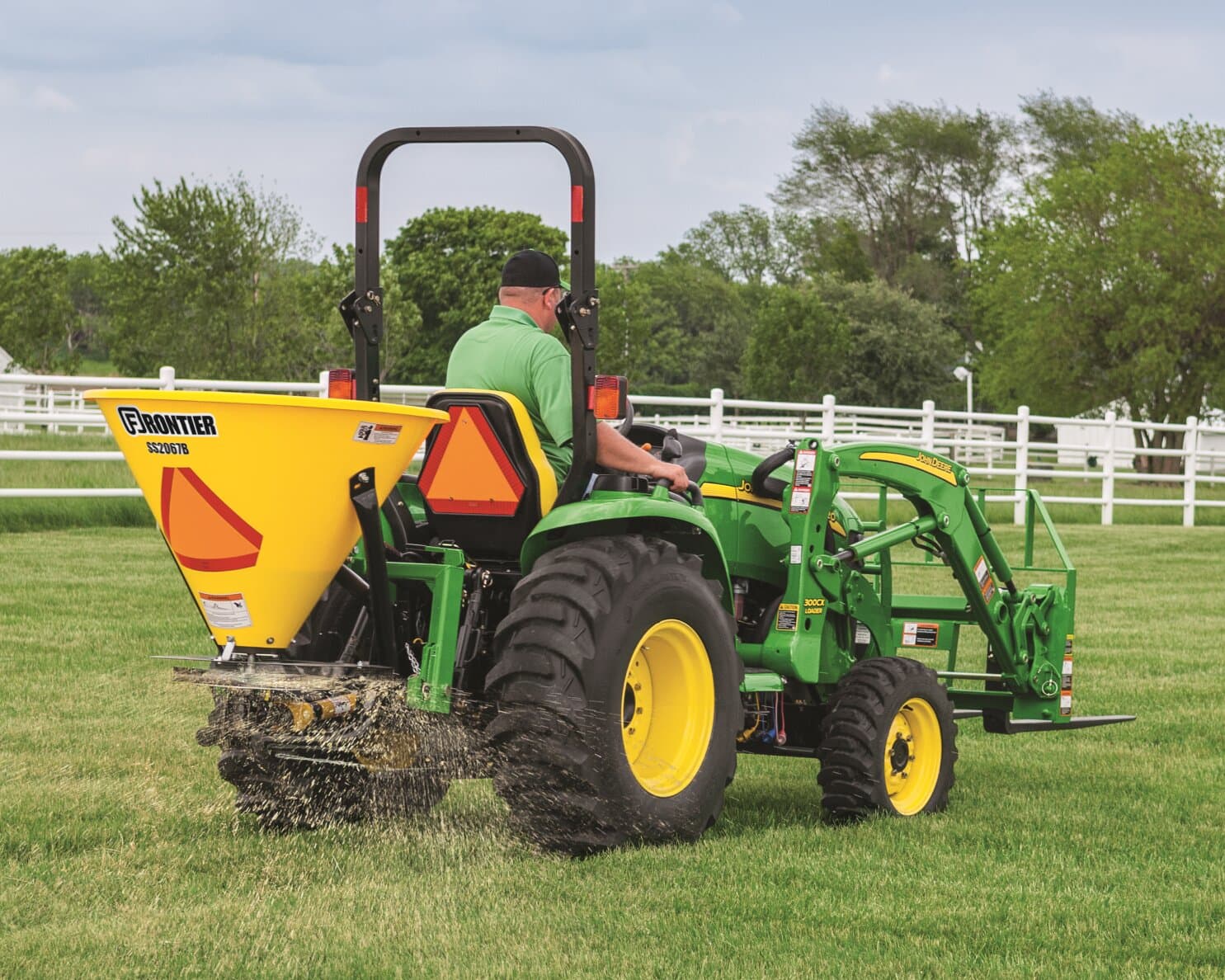
For Delta pastures with significant bare spots or poor grass density, overseeding in spring sets you up for summer grazing. A three-point mounted overseeder or broadcast spreader deposits seed into the disturbed soil surface after your cutter and disk passes.
Bermudagrass is the most common summer pasture grass in the Delta. It establishes aggressively in Mississippi's heat and handles the traffic of summer grazing well. Talk to your local extension office about seeding rates and timing for your specific pasture conditions.
WADE, Inc. carries the rotary cutters, flail mowers, disk harrows, and overseeding equipment that Delta property owners need for spring pasture recovery. If you're not sure which attachment makes the most sense for your situation, bring us a description of your property and we'll help you put together the right plan.
A heavy-duty rotary cutter is the right starting point for most overgrown pasture situations, handling mixed grass, weeds, and light brush faster than any other attachment. For pastures with heavy, stemmy material that needs to break down quickly, a flail mower is worth the added cost for its superior mulching capability.
A brush hog is built for tough, uneven material with thick blades and a heavy gearbox, while a finish mower is designed for clean, lawn-quality cuts on already-maintained ground. Using a finish mower on an overgrown Delta pasture will damage the equipment and won't get the job done.
Overseeding isn't always necessary, but for pastures with significant bare spots or poor grass density after clearing, a broadcast spreader or three-point mounted overseeder following your cutter and disk passes will significantly improve recovery heading into summer grazing season. Bermudagrass is the most common and reliable choice for Mississippi Delta pastures.